Skip to content

Eco‑Packaging: Does It Matter to UK Online Shoppers?

Excessive parcel packaging and sustainability remain key challenges for online retailers. At the same time, environmentally conscious consumers are becoming increasingly aware of the environmental impact of home deliveries.

To understand how much packaging really matters, Whistl Parcels surveyed a representative sample of 1,000 UK adults to explore the role eco‑packaging plays in online purchasing decisions.

What Influences Consumers When Ordering Online?

There are many factors at play when UK shoppers decide whether to place an order. Contrary to popular belief, speed of delivery isn’t always the top priority.

Over 90% of consumers say delivery cost and safe arrival of their parcel are very or somewhat important—making these the two most influential factors. In fact, most British shoppers are willing to wait an extra two to three days for delivery if it means avoiding a delivery charge.

Encouragingly, over two‑thirds of UK shoppers believe that minimising parcel packaging and using environmentally friendly materials is important when ordering online. Interestingly, this matters more to shoppers aged over 35 than to Millennials.

While the ability to specify a delivery location ranks lowest overall, it is still considered important by 61% of consumers—highlighting that convenience remains part of the decision‑making mix.
Common Frustrations When Buying Online

High delivery charges continue to be the number one frustration for UK shoppers, followed closely by delivery delays and excess packaging.

Although non‑environmentally friendly packaging ranks fifth overall, perceptions shift significantly among more sustainability‑focused consumers. For shoppers who view minimising packaging as a priority, excess packaging becomes their second biggest frustration, behind delivery costs.

Age also plays a role. Shoppers aged 55–64 find excessive and non‑eco‑friendly packaging the most frustrating, while those aged 18–24 are the least concerned. Overall, 39% of shoppers say excessive packaging is frustrating, compared to 21% who are frustrated by non‑environmentally friendly materials.

What Do Shoppers Consider “Environmentally Friendly” Packaging?

When asked what defines eco‑friendly packaging, the message was clear: 92% of consumers associate it with recyclability.

However, packaging often remains an afterthought.

  • 58% of UK shoppers say they only consider packaging after delivery—or not at all.

  • Just one in five shoppers are very interested in receiving information about packaging before ordering.

Interest is highest among consumers who already think about packaging before shopping online, with 63% wanting more information upfront. This suggests that education and transparency can influence perceptions—but only for certain segments.

Would Shoppers Pay More for Eco-Packaging?

Half of UK consumers say they would not be willing to pay extra for eco‑friendly packaging. Younger shoppers (under 35) are more open to the idea, while resistance is highest in Northern England, Scotland and Northern Ireland.

Interestingly, frequent online shoppers are more willing to pay for eco‑friendly packaging than infrequent shoppers.

On average, UK consumers would be willing to pay 82p extra for an eco‑friendly option. Willingness decreases with age:

  • 18–24s: £1.19

  • Over 65s: 47p

Does Non-Eco Packaging Affect Brand Perception?

While 58% of consumers say they are unlikely to take action if packaging isn’t eco‑friendly, 42% say they have taken—or would take—some form of action.

Among those who do respond:

  • Many would leave a negative review

  • Others would tell friends and family

  • 15% say they would stop purchasing from the retailer altogether

This highlights the reputational risk of ignoring packaging expectations, even if cost remains the primary driver.

What Eco-Packaging Options Are Available?

The packaging industry has made significant progress, particularly through greater use of recycled cardboard and paper. Plastic remains the biggest challenge.

Following the so‑called “Attenborough effect” after Blue Planet II, consumers have become far more conscious of plastic usage. In response, the industry is introducing alternatives such as:

  • Paper‑based void fill instead of plastic air cushions

  • Recycled paper mailing bags replacing plastic jiffy bags

  • Paper‑based alternatives to bubble wrap

Cost remains a barrier—especially for newer innovations like plastic‑free tape.

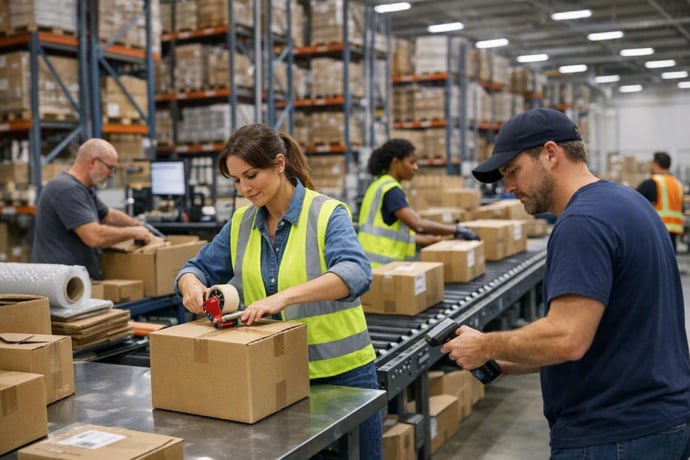
One often overlooked factor is the packing process itself. Well‑trained warehouse teams who select the correct box size and use only necessary materials can dramatically reduce waste, without compromising product protection.

So, Does Eco-Packaging Really Matter?

These findings show that while sustainability does influence consumer attitudes, delivery cost and product safety remain the strongest motivators for UK online shoppers.

That said, businesses that actively minimise waste and demonstrate a commitment to responsible packaging are more likely to build trust, protect their brand reputation and improve overall customer satisfaction.

With specialist warehouse facilities, Whistl Parcels offers a bespoke pick and pack service designed to protect your products while minimising unnecessary packaging—helping you deliver a better experience for your customers and the environment.

Related content