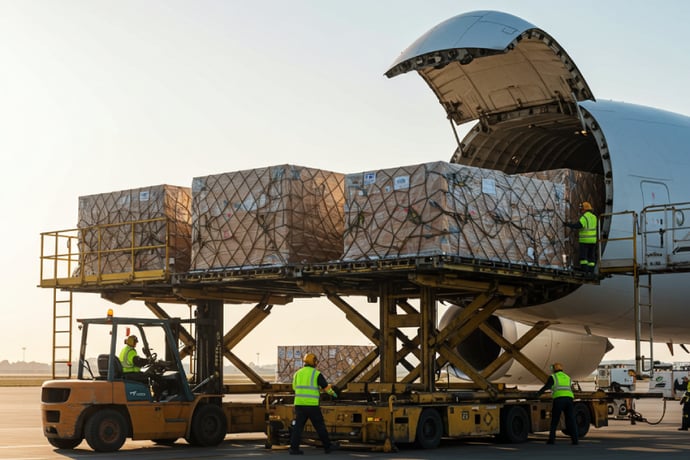
Every day, millions of parcels move across borders. But how do customs officials know exactly what’s inside each one? The answer is Harmonized System (HS) codes.
HS codes are the universal language of international trade. They allow customs authorities around the world to classify goods consistently, assess duties and taxes accurately, and keep global trade moving efficiently.
In this guide, we’ll explain what HS codes are, why they matter, and what online retailers need to know when shipping internationally.
What are HS Codes?
HS codes are a standardised system of names and numbers used to classify traded products. Developed and maintained by the World Customs Organization (WCO), they’re used by customs authorities worldwide to:
-
Identify goods at the border
-
Apply duties, VAT and taxes correctly
-
Monitor and analyse global trade
Think of HS codes as a shared classification system that ensures everyone involved in international shipping is speaking the same language.
A Brief History of the Harmonized System
Before HS codes were introduced, countries used their own product classification systems. That lack of consistency caused confusion, delays and unnecessary costs at customs.
The WCO launched the Harmonized System in the 1980s to bring clarity and standardisation to global trade. Since then, it has become the foundation of international customs processes.
To keep pace with innovation and changing trade patterns, the WCO reviews and updates the HS every five years, ensuring new products and technologies are accurately classified.
How HS Codes Are Structured
HS codes follow a hierarchical structure, becoming more specific at each level:
-
Sections: The HS is divided into 21 sections, each covering a broad category of goods (for example, pulp of wood or printed matter).
-
Chapters: Each section is broken down into chapters, offering greater detail (for example, printed books or newspapers).
-
Headings: Chapters are divided into headings that narrow the classification further.
-
Subheadings: Subheadings provide the most precise product descriptions.
In practice, an HS code is a six-digit number, representing one of over 5,000 commodity groups. For example:
0809.30 – Peaches, including nectarines
Examples of HS Codes
| Product description |
HS Code |
| Women’s wool trousers |
610461 |
| Men’s cotton trousers |
620342 |
| Playing cards |
950440 |
| Children’s colouring book |
490300 |
While the six-digit HS code is the global standard, many countries add extra digits for national use.
When shipping internationally, always use the format required by the destination country.
Why Accurate HS Codes Matter
Incorrect HS classification can cause serious issues for ecommerce retailers.
Potential consequences include:
-
Customs delays due to inspections or reclassification
-
Higher costs from incorrect duty or VAT charges
-
Fines or penalties for underpayment
-
Seizure of goods in serious cases
-
Reputational damage from late deliveries and poor customer experience
Ultimately, the responsibility for accurate classification sits with the seller, not the customer.
The Benefits of Getting HS Codes Right
Using the correct HS codes isn’t just about compliance – it can actively improve your operation.
Key benefits include:
-
Faster customs clearance, reducing delivery delays
-
Accurate duty and tax payments, avoiding overcharges
-
Improved regulatory compliance, lowering legal risk
-
Better customer experience, with predictable costs and delivery times
-
Stronger brand reputation, especially for international buyers
-
Access to trade agreements, helping reduce tariffs where applicable
For high-volume cross-border retailers, these benefits can add up quickly.
How to Find the Correct HS Code
Understand your product
Look closely at its materials, function and intended use. Even small differences can affect classification.
Use official HS resources
The WCO provides the official HS nomenclature, including explanatory notes to support accurate classification.
Use HS code lookup tools
Helpful sources include:
Seek expert support
Customs brokers and trade specialists can help validate classifications and reduce risk, especially for complex products.
Accuracy is your responsibility, so taking time to double-check now can prevent costly issues later.
Conclusion
HS codes play a critical role in smooth, cost-effective international shipping. When used correctly, they help reduce delays, control costs and improve the customer experience.
By investing time in accurate classification, using the right tools and seeking expert support where needed, online retailers can ship internationally with confidence.
Understanding and applying HS codes correctly doesn’t just protect your business – it helps you grow globally.