Skip to content

Unlocking the Last Mile: PUDO, APMs & the Rise of Out‑of‑Home Delivery

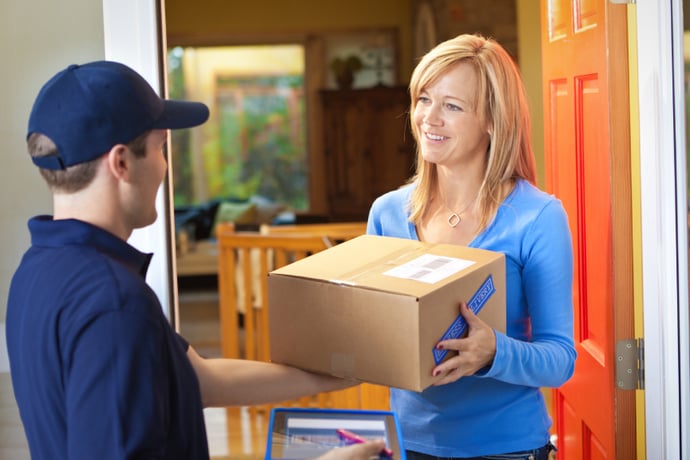
We’ve all been there. You arrive home expecting a delivery, only to find that familiar “Sorry we missed you” card waiting on the doormat. What should have been an exciting moment quickly turns into frustration – another delivery attempt to wait for, or a trip across town to collect a parcel.

This everyday scenario perfectly illustrates why the last mile remains the most complex and costly part of the delivery journey. Failed deliveries increase costs for both retailers and carriers, while customers are left disappointed by delays and inconvenience.

That’s why more retailers are turning to Out‑of‑Home (OOH) delivery solutions, such as parcel lockers and Pick‑Up Drop‑Off (PUDO) points. By directing parcels to secure, convenient locations, OOH delivery reduces failed deliveries, cuts unnecessary journeys and gives customers far more control over when and where they receive their orders.

What was once a niche alternative has now become a mainstream delivery option. Driven by rising consumer expectations for convenience and reliability, OOH delivery delivers clear benefits for everyone involved – greater efficiency for retailers and a better experience for shoppers.
The Benefits of OOH Delivery for Customers and Retailers

OOH delivery solves long‑standing challenges on both sides of the checkout. It enhances convenience for customers while delivering measurable operational and cost benefits for retailers.

For customers

Today’s shoppers expect flexibility, security and choice – and OOH delivery delivers on all three:

  • Convenience and control: Customers no longer need to wait at home for a delivery slot or rely on neighbours. Instead, they can collect parcels from a nearby locker or PUDO point at a time that suits their day.

  • Improved security: With parcel theft on the rise, collecting from a secure locker or staffed location offers valuable peace of mind. Parcels aren’t left unattended, reducing the risk of loss.

  • More delivery choice: Offering OOH alongside home delivery shows customers that a retailer understands different lifestyles. Giving shoppers control over how they receive their orders enhances the overall experience and builds loyalty.

For retailers

Beyond customer satisfaction, the commercial case for OOH delivery is compelling:

  • Lower last‑mile costs: The final mile is the most expensive part of the delivery journey. Consolidating multiple parcels into a single OOH location reduces fuel usage, mileage and driver time, lowering the cost per parcel.

  • Greater delivery efficiency: Drivers can deliver dozens of parcels in one stop, rather than making individual doorstep attempts. This significantly improves first‑time delivery success rates and eliminates the cost of redeliveries.

  • Stronger sustainability credentials: Fewer delivery miles mean lower emissions. OOH delivery supports greener logistics strategies and aligns with growing consumer demand for more sustainable eCommerce options.

UK Consumer Trends: OOH Delivery Goes Mainstream

UK consumer behaviour is shifting rapidly towards more flexible delivery options, with parcel lockers and PUDO points now firmly in the mainstream.

Parcel lockers, in particular, have seen significant growth. Recent research shows that two in five UK adults – around 21 million people – have used a locker in the past year to send, collect or return a parcel. That level of adoption signals a fundamental change in delivery expectations.

The trend is even stronger among younger shoppers. 66% of Gen Z and 54% of Millennials report using parcel lockers in the last 12 months, indicating that OOH delivery is fast becoming a standard part of the online shopping journey.

There’s still plenty of growth ahead. Around 20% of UK consumers who haven’t yet used a parcel locker say they’re open to trying one, highlighting a sizeable untapped audience and reinforcing OOH delivery as a long‑term feature of eCommerce logistics.

How OOH Delivery Works in Practice

Out‑of‑Home delivery typically operates through two core models, each offering distinct advantages:

  • Automated Parcel Lockers (APMs): Self‑service lockers located in supermarkets, train stations or petrol stations provide 24/7 access. Customers receive a unique code to open their locker, making this ideal for busy or unpredictable schedules.

  • Staffed PUDO points: Local shops, newsagents and supermarkets act as collection points, fitting naturally into daily routines. These locations add a personal touch, with staff available to support collections and returns.

Optimising OOH Delivery for eCommerce

To maximise the value of OOH delivery, retailers must integrate it seamlessly into the online shopping journey.

  • Checkout integration: Allowing customers to select their preferred locker or PUDO point directly at checkout – ideally via an interactive map – makes the process intuitive and friction‑free.

  • Network selection: Partnering with a delivery network that offers strong coverage in key customer locations is essential. Sites along commuting routes or close to residential areas deliver the greatest value, ensuring customers always have a convenient option nearby.

Conclusion

Out‑of‑Home delivery is transforming the last mile by tackling challenges that have frustrated retailers and consumers for years. From reducing failed deliveries and lowering costs to improving convenience, security and sustainability, the benefits are clear.

With adoption accelerating – particularly among younger shoppers – parcel lockers and PUDO points are no longer optional extras. They are fast becoming a standard expectation in online retail.
Put simply, OOH delivery is no longer an alternative. It’s a core component of modern eCommerce logistics and a vital step towards a more customer‑focused and sustainable delivery future.

Related content