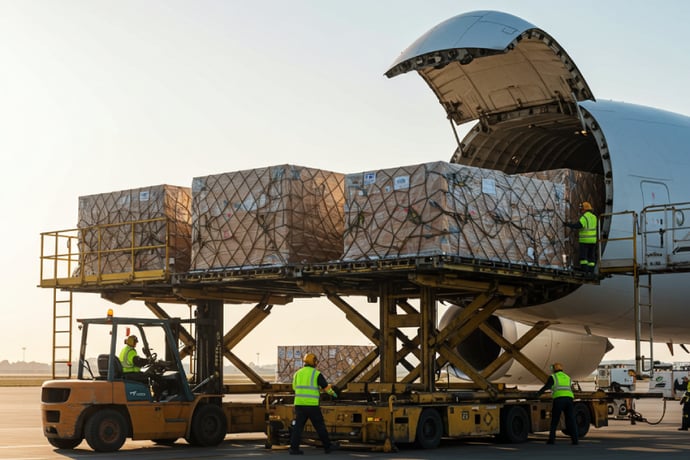
Growing eCommerce Industries: The Rise of Cross-Border Shipping
Increasing global internet penetration has made cross-border shipping more accessible than ever. By “cross-border”, we mean the buying and selling of goods and services beyond domestic markets. If you’re new to international logistics, our international shipping terms glossary is a useful place to start.
Worldwide internet penetration currently stands at 67.1%, with Europe and North America benefiting from the highest levels of connectivity. Unsurprisingly, the European eCommerce market has already broken multiple records and continues to show strong momentum.
However, other regions are catching up fast and are now home to some of the fastest-growing eCommerce markets in the world.
-
South America (82.6%), including Argentina and Brazil, is rapidly improving connectivity. Mobile usage is a key driver, with 4G network coverage estimated at 94.17% in 2024.
-
Southeast Asia is projected to reach 90.58% internet penetration by 2029, opening up significant opportunities for international retailers.
-
While internet access across Africa still lags behind other regions, 75.9% of people in Southern Africa now have internet access, signalling long-term growth potential.
As the number of connected consumers increases, so do the commercial opportunities for retailers and export shipping providers alike.
The global B2C cross-border eCommerce market is forecast to reach $7.9 trillion by 2030, up from $785 billion at the start of the decade.
Key Drivers of Global eCommerce Market Growth
-
Globalisation – A more interconnected global economy has made it easier for businesses to reach customers in new markets.
-
Technological advancements – High-speed internet, mobile devices and secure payment gateways have lowered barriers for both sellers and buyers.
- Changing consumer behaviour – Shoppers increasingly favour the convenience, choice and competitive pricing offered by eCommerce.