
Skip to content

A Retailer’s Guide to Parcel Carriers

What is a parcel carrier?

First coined by 19th‑century novelist Anna Porter, a parcel carrier is “a person who, or thing which carries a parcel; specifically a company whose business is to transport parcels.” Despite huge advances in logistics, this definition still broadly holds true today.

In modern eCommerce, a parcel carrier (often referred to as a courier) is a company such as Hermes, Yodel or DPD. These carriers collect parcels from retailers, wholesalers or consumers, transport them to local hubs for sorting, then move them through national or international networks before final delivery.

Once a parcel reaches its destination zone, it is passed to the carrier’s final‑mile delivery operation, where it is delivered to the consumer or business—often within a specific time window and with real‑time tracking.

A 2021 study by Whistl found that over 2.8 billion parcels were sent in the UK in the previous financial year. The domestic parcels market remains highly fragmented, with 16 major national carriers. From a consumer perspective, Royal Mail was the most popular end carrier in 2019.

From a retailer’s perspective, however, Hermes was the most commonly offered delivery option at checkout.

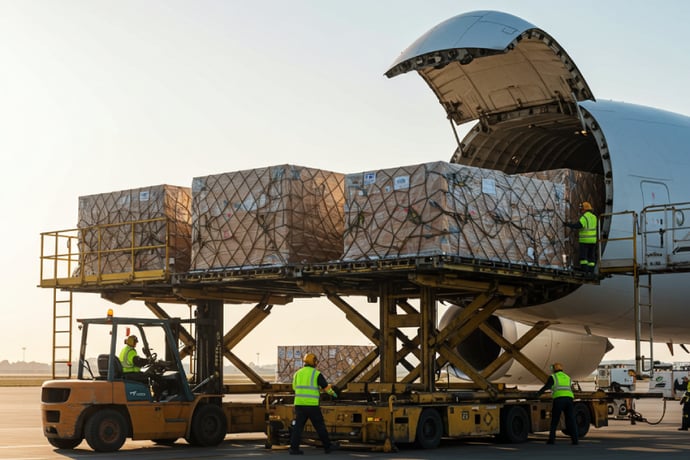
How do parcel carriers work in practice?

Once your products are securely packaged, the next step is applying the correct shipping label. For international shipments, this also includes commercial invoices and customs documentation.

Depending on your agreement with your carrier partner(s), parcels can either be:

  • Collected from your warehouse or retail premises, or

  • Dropped off at a designated local depot or drop‑off point

After collection, parcels are taken to a local depot for sortation, where items are grouped by destination. For UK deliveries, parcels then move to a destination hub for further sorting into smaller geographic areas.

From here, delivery drivers collect parcels and complete the final mile—using route‑optimisation algorithms to ensure the most efficient delivery sequence possible.

Most carriers now offer a range of final‑mile options, including:

  • Delivery time re‑scheduling

  • SMS or email notifications

  • Signature, PIN or photo proof of delivery

What do consumers expect from parcel carriers?

Consumer expectations around delivery continue to rise—often without a willingness to pay more.

A study by The Whistl Group found:

  • Over 80% of online shoppers say tracking is important

  • 45% have abandoned a purchase due to unsatisfactory delivery options

Visibility and control are now essential:

  • 87% value proof of delivery

  • 86% expect the ability to reschedule

  • 85% want confirmation of dispatch

Returns also play a critical role. A 2019 Parcelhub whitepaper found only 55% of mid‑market retailers offered returns as standard at the time. More recent research shows UK shoppers are actively deterred by retailers that don’t offer free returns — prompting brands such as Zalando to evolve their policies in response.

How can retailers optimise carriers for international delivery?

With the acceleration of eCommerce and increasingly complex cross‑border regulations — particularly when shipping from the UK into the EU — choosing the right international carrier partner is critical.

For most retailers, a multi‑carrier strategy is the most effective approach, enabling you to select carriers based on destination, service level and cost.

Regardless of carrier choice, accurate customs data is essential. Well‑prepared carriers will request this information at booking, while others may require it post‑label creation. Typically, this includes:

  • Your EORI number

  • HS codes for your products

  • Commercial invoices

Providing this information correctly helps avoid delays, additional charges and poor customer experiences.

How can retailers improve the last‑mile delivery experience?

According to Capgemini, the final mile is now one of the most influential stages of the customer journey. A positive delivery experience directly impacts retention, with three‑quarters of consumers willing to spend more following a successful delivery.

During a customer’s first purchase, expectations are particularly high. Research from Whistl shows consumers increasingly expect enhanced final‑mile features as standard.

To meet these demands, mainstream carriers are investing heavily in in‑flight delivery options.

Yodel’s Xpect service, for example, allows customers to:

  • Leave parcels in a safe place

  • Nominate a preferred neighbour (or specify who to avoid)

  • Change delivery date or address

  • Collect from a local depot or hold parcels for up to 16 days

Meanwhile, Hermes’ Digital Futures solution empowers consumers through an app that provides SafePlace photos, GPS location tracking and geofencing—offering photographic and geographic proof of delivery, even when customers aren’t at home.

What are the benefits of working with multiple parcel carriers?

Diversification reduces risk. The same principle applies to delivery as it does to suppliers, sales channels and customer communications.

A multi‑carrier strategy allows retailers to:

  • Match carriers to product size, weight and value

  • Optimise costs for time‑critical vs economy deliveries

  • Select specialists for international or high‑volume shipping

Whistl Parcels works with a wide range of carrier partners, enabling retailers to offer delivery options aligned to product type, destination and customer urgency. Businesses sending as few as 40 parcels per day benefit from:

  • A single daily collection

  • One integration across order management systems and sales channels

How can your delivery strategy drive continuous improvement?

A Brightpearl and Trustpilot study found 77% of negative reviews relate to post‑purchase issues—often delivery‑related.

Successful retailers consistently:

  • Monitor delivery performance

  • Analyse customer feedback

  • Address issues proactively

Working with a multi‑carrier specialist such as Whistl gives retailers expert support in managing delivery complexity, while aligning logistics performance with business growth and evolving customer expectations.

How Whistl Parcels has supported customers with carrier management

grüum

grüum designs sustainable skincare, haircare and shaving products for all ages and genders. Whistl Parcels supports grüum by managing their parcel deliveries and ensuring products reach customers reliably and efficiently.

musicMagpie

One of the world’s largest eBay and Amazon sellers, musicMagpie partnered with Whistl to meet high‑volume global delivery demands. Whistl implemented a bespoke carrier management solution for letters, packets and parcels—leveraging internal sortation to reduce delivery costs while maintaining service quality in the UK and internationally.

Conclusion

Choosing the right parcel carrier partners can significantly improve customer satisfaction, repeat purchase and long‑term growth.

Retailers should assess carrier strengths, integration capabilities and customer feedback carefully. At Whistl, we continuously review our carrier network to ensure retailers benefit from cost‑effective delivery that meets consumer expectations—without compromise.

Related content